Why Low-Impact Ballet Fitness Is More Than a Pilates Workout
Pilates has become one of the most talked-about fitness methods. But what happens when you combine its precision with the strength, coordination and artistry of classical ballet?
In recent years, low-impact exercise has attracted increasing attention among adults looking for effective training without constant jumping, heavy impact or exhausting high-intensity routines.
Pilates, barre and mobility-based workouts have become popular choices.
Yet classical ballet offers another dimension to this movement philosophy — one that combines strength, posture, balance, coordination and artistic expression.
At Ballet Body Sculpture, these qualities come together in a method developed by former international Principal Ballerina Asta Bazeviciute.
What Is a Low-Impact Ballet Workout?
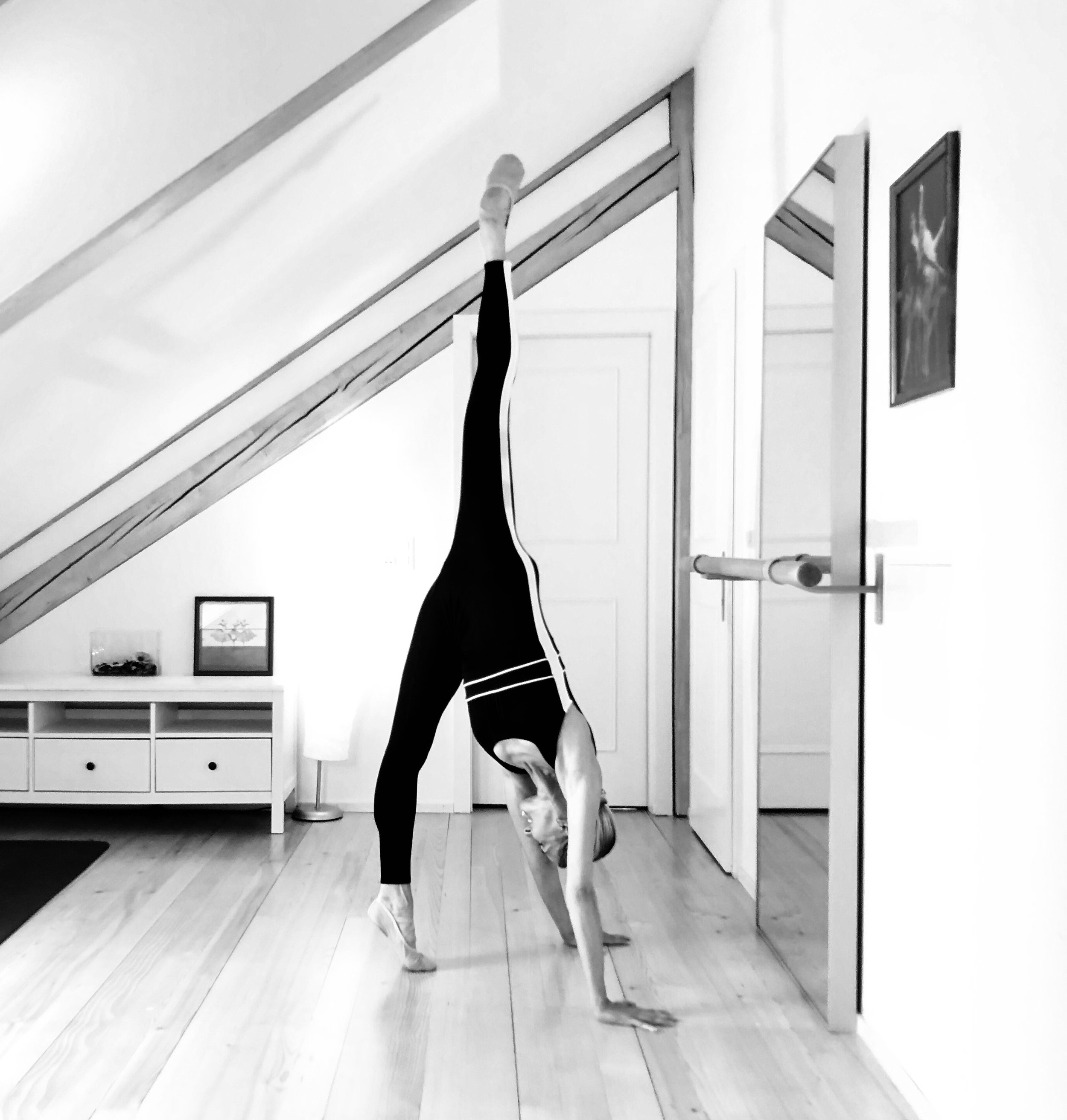
A low-impact ballet workout uses movements inspired by classical ballet while keeping at least one foot in contact with the floor during most exercises.
Unlike a professional ballet class involving demanding jumps, turns and advanced choreography, ballet-inspired fitness can be adapted to suit different experience levels.
Exercises may include pliés, tendus, relevés, controlled leg extensions and ballet-inspired arm movements.
Although these movements may appear gentle, they can challenge the muscles of the legs, hips, back and abdomen.
The emphasis is not simply on completing repetitions.
It is on how precisely and efficiently the body moves.
1. Ballet Trains Strength and Coordination Together
Many conventional workouts focus on individual muscle groups.
Ballet frequently requires several parts of the body to work together.
Consider a simple relevé — rising onto the balls of the feet.
This movement challenges the calf muscles, ankles and feet while requiring balance, trunk control and alignment.
Add coordinated arm movements, and the exercise becomes more complex.
The body must maintain stability while multiple joints move simultaneously.
This integration of strength and coordination is one of ballet training’s distinctive qualities.
2. Core Strength Becomes Part of Every Movement
Pilates is widely recognised for its emphasis on core stability and controlled movement.
Ballet uses many of these qualities in a different context.
A dancer must stabilise the trunk while extending a leg, balancing, turning or transferring weight.
The core therefore works as part of an integrated movement system.
At Ballet Body Sculpture, Pilates-inspired core exercises are combined with ballet technique to develop both trunk control and coordination.
Rather than treating abdominal strength as a separate objective, the method encourages participants to apply that strength throughout the workout.
3. Posture Is Trained Dynamically
Beautiful posture is one of the most recognisable qualities of professional ballet.
However, ballet posture is not simply about pulling the shoulders back or holding the stomach in.
It involves coordinating the feet, pelvis, spine, shoulders and head.
During a ballet workout, participants repeatedly practise alignment while moving.
This can help develop greater postural awareness and movement control.
For adults who spend long hours sitting, learning to organise the body through movement can be particularly valuable.
4. Low Impact Doesn’t Mean Low Intensity
One common misconception is that an exercise must involve jumping, running or heavy weights to be effective.
In reality, low-impact exercises can still create substantial muscular effort.
Slow, controlled movements, repeated leg exercises and sustained balances can challenge muscular endurance.
However, low-impact training is not automatically suitable for every joint condition, and ballet exercises should be adapted to individual needs.
For adults seeking an alternative to high-impact fitness, a carefully structured ballet-inspired workout can provide a challenging option.
5. Ballet Introduces an Artistic Dimension to Fitness
Perhaps the most distinctive difference between ballet fitness and conventional conditioning is the role of music and movement expression.
Ballet connects physical exercise with rhythm, coordination and artistry.
Instead of focusing exclusively on repetitions or muscular fatigue, participants also learn how movements connect.
The arms, head, torso and legs become part of a coordinated sequence.
This can make exercise feel more engaging and rewarding.
For many adults, enjoyment is an important factor in maintaining a consistent fitness routine.
How Is Ballet Body Sculpture Different From Traditional Barre?
Although both methods use ballet-inspired movements, their emphasis can differ.
Conventional barre fitness often uses small, repetitive movements and isometric holds to develop muscular endurance.
Ballet Body Sculpture takes a broader approach.
Its foundation comes from professional classical ballet training, combined with Pilates, body conditioning, mobility and stretching.
The focus extends beyond muscular fatigue to include alignment, coordination, balance, flexibility and movement quality.
The objective is to develop a body that is not only stronger, but also more capable and controlled in movement.
Who Can Benefit From Ballet-Inspired Fitness?
Low-impact ballet fitness can appeal to adults who:
Want to improve posture and body awareness.
Enjoy Pilates but would like more standing movement and coordination.
Prefer controlled exercise over high-impact workouts.
Want to develop balance, mobility and muscular endurance.
Are curious about ballet but have no professional dance background.
Would like an exercise routine combining physical training with music and artistry.
The most suitable programme depends on individual fitness, experience and physical needs.
Experience Classical Ballet at Our Nutcracker Workshop in Zurich
If you would like to explore ballet beyond a conventional fitness class, Ballet Body Sculpture invites you to a special festive experience.
The Nutcracker: A Christmas Ballet Experience
On Saturday 12 December 2026, former Principal Ballerina Asta Bazeviciute will lead an exclusive two-hour workshop inspired by one of the most beloved classical ballets.
The experience begins at the ballet barre, where participants will practise classical technique, posture, alignment, balance and coordination.
The workshop then moves into the centre, where these foundations come together in accessible choreography inspired by The Nutcracker, accompanied by Tchaikovsky’s beautiful music.
The experience also includes stretching and movement refinement.
Saturday 12 December 2026
12:30–14:30
Villa Egli, Höschgasse 4, 8008 Zurich
CHF 65 — Early Bird and Active BBS Members
CHF 75 — Regular Price
Some basic ballet or dance experience is recommended.
Places are limited to preserve a personal learning experience.
Discover the workshop and reserve your place:
https://www.balletbodysculpture.com/bbs-workshops/p/nutcracker-ballet-workshop
Discover the Ballet Body Sculpture Method
Ballet Body Sculpture brings together the discipline of classical ballet, the precision of Pilates and the effectiveness of body conditioning.
Created by former Principal Ballerina Asta Bazeviciute, the method helps adults develop strength, posture, mobility, coordination and body awareness.
Explore BBS group classes, private training and online workouts in Zurich, London and beyond.
https://www.balletbodysculpture.com
You don’t have to become a ballerina to discover the benefits of ballet training.
Train with precision. Move with grace.