Why More Adults Are Discovering Ballet: 7 Benefits Beyond Fitness
What if the secret to better posture, greater strength and more graceful movement was hidden inside classical ballet?
For generations, ballet has been associated with professional dancers, years of training and extraordinary physical discipline.
But something is changing.
More adults are discovering ballet not because they want to become professional ballerinas, but because they want to feel stronger, improve their posture, develop flexibility and reconnect with their bodies through movement.
And perhaps most importantly, they are discovering that ballet offers something conventional fitness sometimes overlooks: the combination of physical training, artistic expression and mindful movement.
At Ballet Body Sculpture, this philosophy is at the heart of our approach to adult fitness.
Founded by former Principal Ballerina Asta Bazeviciute, the Ballet Body Sculpture Method combines classical ballet technique, Pilates, body conditioning, mobility and stretching to make the benefits of professional dance training accessible to adults.
Here are seven reasons why ballet-inspired fitness deserves a place in your exercise routine.
1. Ballet trains posture — not just muscles
One of the first things people notice about a professional ballerina is her posture.
The lifted carriage, beautifully aligned spine, relaxed shoulders and controlled movement create an unmistakable sense of elegance.
But ballet posture isn’t simply about standing straight.
It involves learning how to coordinate the entire body, from the feet and pelvis to the spine, shoulders and head.
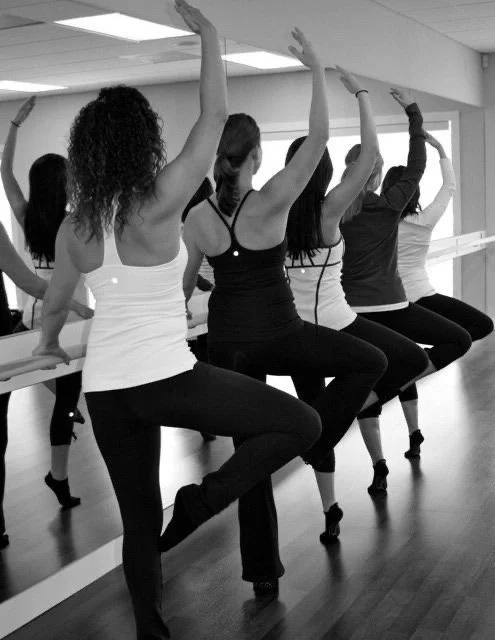
Through exercises at the ballet barre and in the centre, adults can develop greater awareness of their alignment and learn to maintain control while moving.
For people spending long hours at a desk, this can be particularly valuable.
At Ballet Body Sculpture, posture is not an isolated exercise. It is a fundamental part of every movement.
2. Ballet develops core strength through movement
Traditional fitness often approaches core training through isolated abdominal exercises.
Ballet takes a different approach.
A dancer must maintain stability while balancing, lifting the legs, transferring weight, turning and coordinating the arms.
The core works together with the back, pelvis, hips and legs to support movement.
This creates a type of functional core training that develops not only muscular endurance, but also coordination and body awareness.
By combining ballet technique with Pilates principles, Ballet Body Sculpture trains the centre of the body while teaching participants how to use that strength in everyday movement.
3. Ballet strengthens the legs while improving balance
A simple ballet plié may appear effortless.
But when performed correctly, it challenges the muscles of the legs and hips while requiring precise alignment.
Other ballet exercises, such as tendus, relevés and controlled leg extensions, develop strength, balance and coordination.
Unlike workouts that focus only on repetitions, ballet encourages awareness of how each movement is performed.
The objective is not simply to move more.
It is to move better.
4. Ballet improves mobility and flexibility
Many adults experience stiffness from prolonged sitting, repetitive movement or a lack of varied physical activity.
Ballet training introduces controlled movement through different ranges of motion.
The hips, ankles, spine and shoulders are all challenged in ways that may be missing from everyday routines.
However, flexibility alone is not the goal.
Professional dancers need strength and control within their available range of movement.
This distinction is essential to the Ballet Body Sculpture Method, where stretching and mobility exercises are combined with strengthening and alignment work.
5. Ballet develops coordination and body awareness
One of ballet’s most distinctive qualities is the way it connects different parts of the body.
The arms, legs, head and torso must work together, often in different directions and rhythms.
This challenges concentration, coordination and spatial awareness.
For adults who have spent years repeating familiar movement patterns, ballet can introduce a completely new physical experience.
Even simple ballet exercises require attention, precision and an awareness of how the body is organised.
Over time, participants can develop a stronger connection between movement and control.
6. Ballet combines physical training with mental wellbeing
Unlike many conventional workouts, ballet brings music, rhythm and artistic expression into physical exercise.
The mind becomes engaged in learning movement, coordinating the body and responding to music.
For many adults, this creates an enjoyable alternative to repetitive fitness routines.
Instead of concentrating only on calories or repetitions, the focus shifts toward learning, expression and physical awareness.
The result can be a workout that feels both physically challenging and mentally refreshing.
7. Ballet can help you develop a more graceful way of moving
Grace is often misunderstood as something people are simply born with.
In professional ballet, graceful movement is developed through years of technique.
It involves balance, coordination, alignment, controlled transitions and an understanding of how movement flows through the body.
These are trainable skills.
You do not need to perform on stage to benefit from them.
Learning how to stand with better alignment, coordinate the arms and move with greater control can influence the way you carry yourself beyond the studio.
Grace is not simply an appearance. It is a quality of movement that can be developed.
Is ballet suitable for complete beginners?
Absolutely.
You do not need childhood ballet experience, exceptional flexibility or a particular body type to begin ballet-inspired fitness.
The important distinction is choosing a class designed for adult beginners rather than entering professional-level ballet training.
At Ballet Body Sculpture, classical ballet principles are adapted into accessible exercises combining posture, core training, body conditioning, coordination and mobility.
The aim is not to create professional dancers.
It is to make the benefits of ballet training available to people who want to move with greater strength, confidence and awareness.
Experience the magic of Swan Lake — Saturday, 24 October in Zurich
If you have ever wondered what it feels like to move like a ballerina, this is your opportunity.
This Saturday, Ballet Body Sculpture presents an exclusive beginner-friendly workshop:
SWAN LAKE: FROM POSTURE TO GRACE
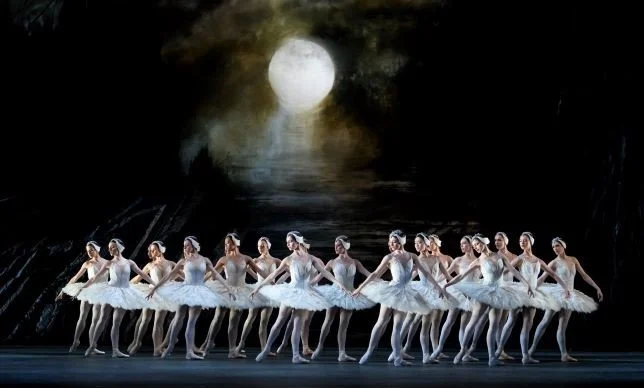
An Exclusive Swan Lake Ballet Experience with Former Principal Ballerina Asta Bazeviciute
Inspired by one of the most iconic ballets in classical dance, this two-hour workshop introduces participants to the techniques behind beautiful posture, controlled movement and elegant ballet expression.
Drawing on her international stage experience performing Swan Lake, Asta will guide participants through:
Classical ballet barre exercises
Posture and body alignment
Core stability and balance
Graceful arm movements
Beginner-friendly Swan Lake choreography
Stretching and mobility
No previous ballet experience is required.
Saturday, 24 October 2026
12:30–14:30
Villa Egli, Hoschgasse 4, 8008 Zurich
Only 2 places left!
This intimate workshop is nearly fully booked, with just two remaining places available.
If you have been curious about ballet, this is a beautiful opportunity to experience it through the guidance of a former Principal Ballerina.
Reserve one of the final two places HERE
Discover Ballet Body Sculpture
Ballet Body Sculpture brings together the discipline of classical ballet, the precision of Pilates and the benefits of functional body conditioning.
Our training is designed for adults who want more than an ordinary workout.
Whether your goal is better posture, greater strength, improved mobility or simply a more enjoyable relationship with movement, ballet-inspired fitness offers a different approach.
Explore Ballet Body Sculpture classes in Zurich, London and online.
You don’t need to become a ballerina to benefit from the art of ballet.
You simply need to begin.