Can You Get a Dancer’s Body Without Becoming a Ballerina?
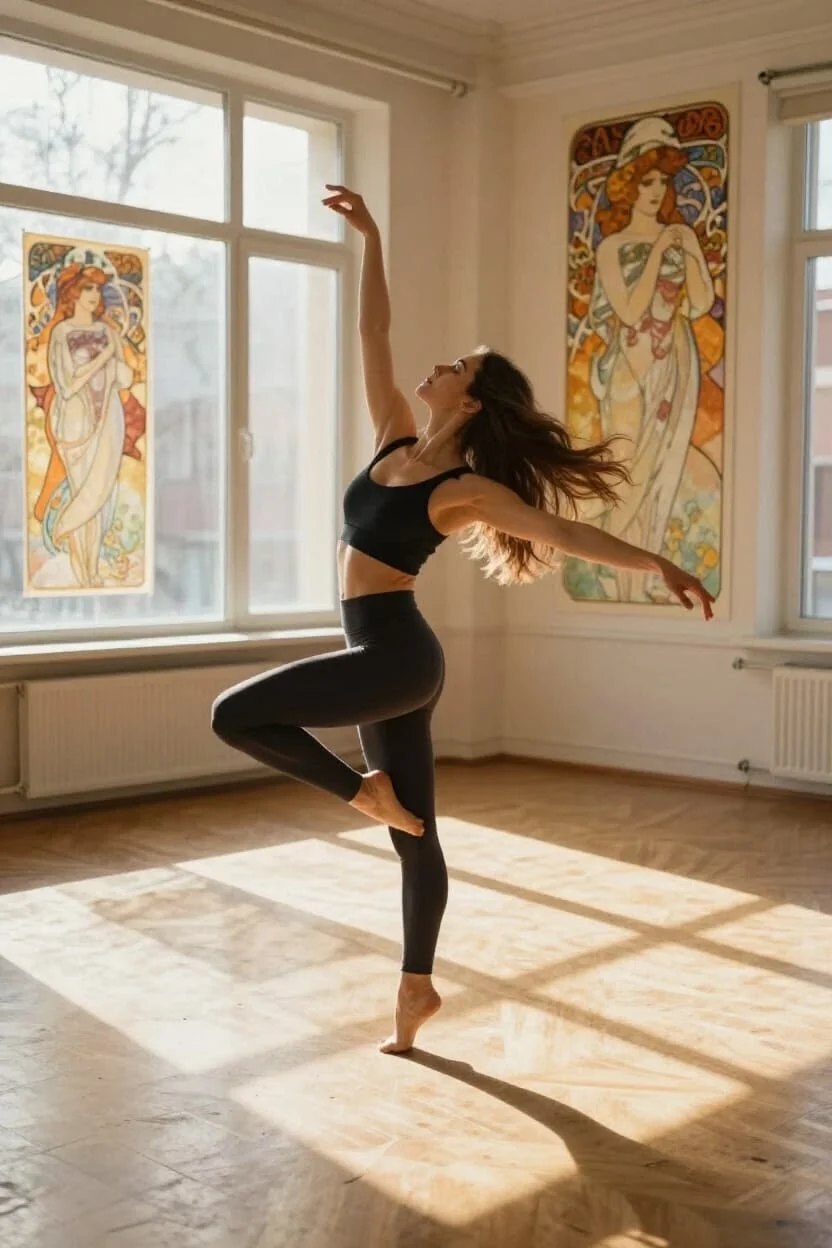
The phrase “dancer’s body” creates a very specific image.
Long lines.
Strong legs.
Defined muscles.
Elegant posture.
A lifted carriage.
Effortless movement.
But here’s the part that is often misunderstood:
You don’t have to become a professional ballerina to train the qualities associated with a dancer’s physique.
And you certainly don’t need to spend your childhood at a ballet barre.
What you do need is the right type of movement training.
What actually creates a dancer’s physique?
Professional dancers don’t develop their physicality from one magical exercise.
It comes from years of highly specific movement.
Ballet training repeatedly challenges:
muscular endurance
strength
balance
coordination
flexibility
postural control
precision
body awareness
movement efficiency
The dancer’s appearance is therefore partly a reflection of what the body is repeatedly asked to do.
It is not simply the result of doing “ballet exercises.”
A dancer’s body is trained, not genetically guaranteed
This distinction is important. There is no single body type that defines a dancer.
Professional ballet itself has historically placed particular demands on body composition and physical characteristics, but individual bodies vary enormously.
And an adult beginning ballet-inspired fitness should not expect to reproduce the physique of a professional ballerina.
The realistic goal is different:
to develop the movement qualities that ballet training is known for.
That means becoming stronger, more coordinated, more mobile and more aware of how you use your body.
You don’t need ballet experience
This is where ballet-inspired fitness differs from professional ballet training. A professional ballet class assumes years of technical progression.
A ballet-inspired fitness programme can take selected principles of ballet and adapt them for adults.
You can work on:
Posture
Learning how to organise the body through the feet, pelvis, spine, shoulders and head.
Core control
Developing stability and control around the trunk while the limbs move.
Leg strength
Using controlled ballet-based movements to challenge the legs and hips.
Mobility
Working through controlled ranges of movement rather than simply stretching passively.
Balance
Learning to control your centre of gravity while standing and moving on one leg.
Coordination
Training the arms, legs and torso to work together.
These are useful physical skills whether or not you ever intend to perform on stage.
Why ballet can make movement look different
There is something distinctive about ballet training.
It doesn’t only ask:
“Can you perform the movement?”
It asks:
“Can you perform the movement with control, alignment and intention?”
That changes the way you train.
A simple leg lift becomes an exercise in pelvic control.
A plié becomes an exercise in alignment and leg strength.
Port de bras becomes coordination and upper-body control.
Standing on one leg becomes balance and stability.
A slow tendu becomes an exercise in foot, ankle, leg and hip control.
The movement may look elegant.
But underneath the elegance is physical work.
The “ballet body” is not about being skinny
This is an important distinction. A dancer’s physique should not be reduced to being thin. Strength is essential.
Professional dancers need strong legs, feet, hips, trunk and back to cope with the demands of training and performance.
Dance research also demonstrates the importance of physical qualities including muscular endurance, balance, coordination and strength. (PubMed)
The modern interpretation of ballet fitness should therefore be about strength, control and physical confidence, rather than chasing an unrealistic body shape.
What about Pilates?
Pilates can be an excellent complement to ballet-inspired training.
It places considerable emphasis on core stability, posture, precision and controlled movement. Research reviews have found evidence supporting its potential benefits for posture and postural alignment. (PubMed)
This is why many ballet-based training systems naturally incorporate Pilates principles.
Ballet teaches you to coordinate the whole body through space.
Pilates helps you develop controlled movement from the centre.
Together, they can create a powerful foundation for adult fitness.
You don’t have to train like a professional dancer
In fact, you shouldn’t.
Professional ballet is a specialised performance discipline involving years of training and significant physical demands. Ballet dancers also experience injury risks associated with their high training loads and technical demands. (PubMed)
For the general population, the objective should be very different.
You can take the principles of ballet without reproducing the lifestyle of a professional dancer.
That means:
less obsession with perfection
more attention to alignment
less punishment
more precision
less pressure
more body awareness
less “burn”
more intelligent movement
This is where Ballet Body Sculpture is different
The Ballet Body Sculpture Method was created to translate the movement principles of professional ballet into an accessible training system for adults.
It combines:
Ballet
for posture, alignment, balance, coordination and graceful movement.
Pilates
for core stability, precision and control.
Body Conditioning
for strength and muscular endurance.
Mobility & Stretching
for flexibility and freedom of movement.
The objective isn’t to turn you into a ballerina.
It is to help you develop some of the physical qualities that make dancers look and move the way they do.
So, can you get a “dancer’s body”?
If by “dancer’s body” you mean becoming an exact physical replica of a professional ballerina, no — and that shouldn’t be the goal.
But if you mean:
stronger legs
better posture
a more controlled core
greater mobility
improved balance
more defined muscular tone
better coordination
and more graceful movement
then ballet-inspired training can absolutely be part of that journey.
You don’t need to become a ballerina.
You need to train the body with intention.
You don’t need the stage to benefit from ballet.
You can bring the discipline, precision and artistry of ballet into your everyday movement — whether you are 25, 45, 55 or beyond.
That is the philosophy behind Ballet Body Sculpture.
Train like a dancer. Move like yourself.
Explore Ballet Body Sculpture →