Ballet vs Pilates vs Barre: Which Is Better for Posture and Core Strength?
Three popular methods. Three different approaches to movement. But which one actually delivers the results you’re looking for?
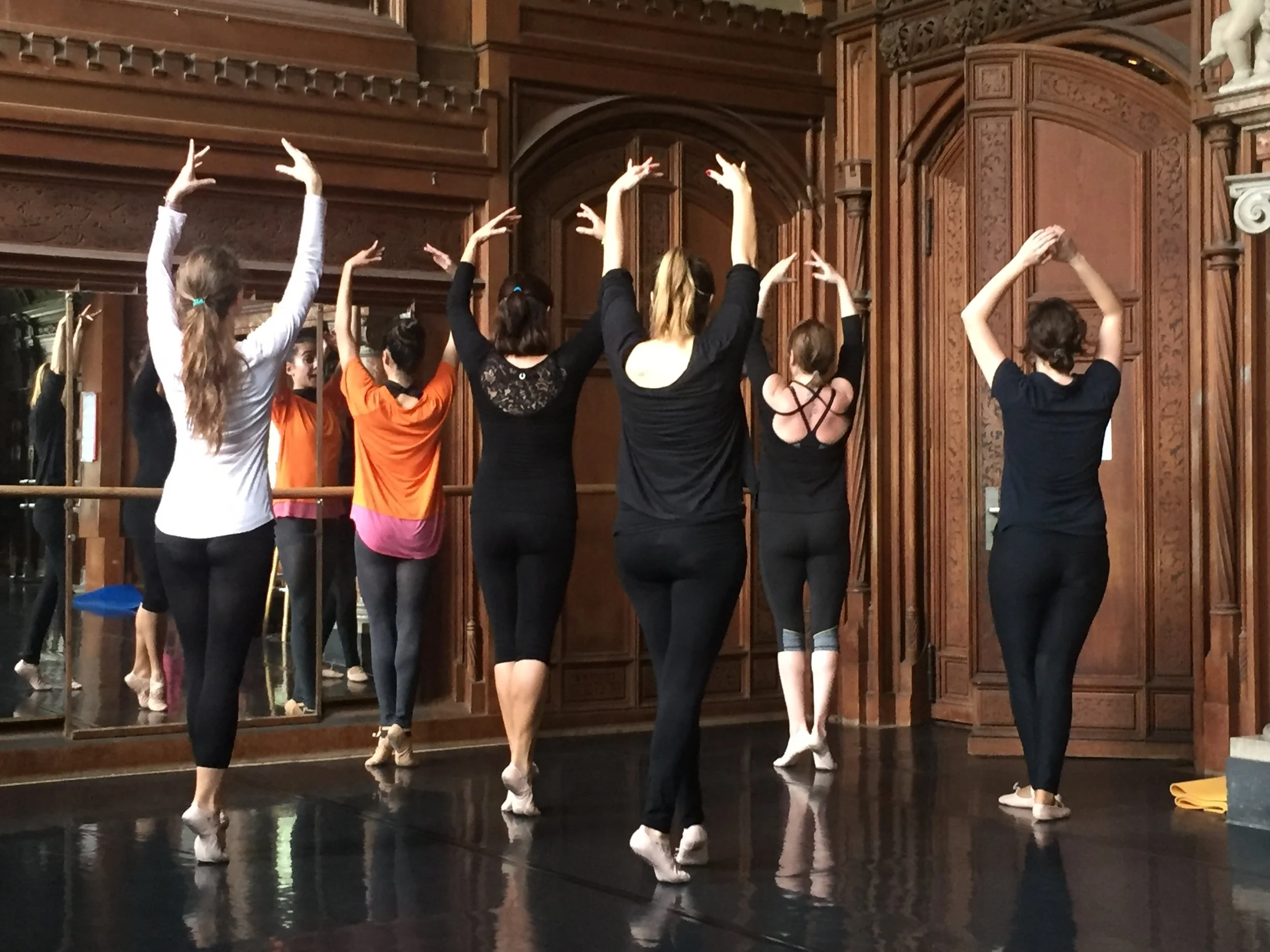
If you’re searching for a workout to improve your posture, strengthen your core and develop a more toned, balanced body, you’ve probably come across ballet, Pilates and barre.
At first glance, they appear surprisingly similar.
All three emphasise control, alignment and precise movement. They can all challenge your muscles without requiring heavy weights.
Yet the way they train your body — and the physical skills they develop — can be quite different.
Understanding these differences can help you choose a training method that supports your goals.
And sometimes, the most effective solution isn’t choosing between them.
What Is the Difference Between Ballet, Pilates and Barre?
Although these methods share certain principles, each has its own emphasis.
Classical Ballet: Strength Through Coordination and Movement
Classical ballet is a highly developed movement discipline that combines physical strength, balance, flexibility, coordination and artistic expression.
A dancer must maintain precise alignment while moving the arms, legs and torso independently.
Even seemingly simple exercises such as pliés, tendus and relevés require muscular control, balance and coordination.
Unlike conventional strength training, ballet develops these qualities simultaneously.
Ballet’s distinctive benefit is learning to maintain strength and alignment while moving with precision and grace.
Pilates: Core Stability and Controlled Movement
Pilates was developed around principles of controlled movement, concentration, breathing and body awareness.
Exercises often focus on the relationship between the abdominal muscles, pelvis and spine.
Pilates can be particularly useful for developing trunk strength, movement precision and awareness of how different parts of the body work together.
It can be practised on a mat or using specialised equipment, including the reformer.
Pilates is particularly valuable for developing core control and improving movement awareness.
Barre Fitness: Muscular Endurance and Conditioning
Modern barre fitness takes inspiration from ballet positions and combines them with elements of Pilates, resistance training and fitness conditioning.
Many barre workouts use small, repetitive movements, isometric holds and high repetitions.
These exercises can create considerable muscular fatigue, particularly in the thighs, glutes and core.
Unlike traditional ballet training, barre fitness generally places less emphasis on complex choreography and classical ballet technique.
Barre’s main strength is accessible, low-impact muscular conditioning.
Which Is Better for Improving Posture?
Posture is often misunderstood as simply standing straight or pulling the shoulders backwards.
In reality, effective posture requires coordination between the feet, pelvis, spine, shoulders and head.
It also requires the ability to maintain alignment while moving.
How Pilates Helps Posture
Pilates develops awareness of spinal position, pelvic control and trunk stability.
Through controlled exercises, participants learn to recognise and adjust their movement patterns.
This can be particularly useful for people who spend long hours sitting or who want to improve their awareness of alignment.
How Ballet Helps Posture
Ballet approaches posture through movement.
A dancer must maintain control while balancing, extending the legs, coordinating the arms and transferring weight.
This creates a dynamic challenge that goes beyond holding a static position.
Ballet also develops what dancers call épaulement — the coordinated positioning of the shoulders, head and upper body.
This contributes to the elegant carriage associated with classical ballet.
What About Barre?
Barre fitness can improve muscular endurance and encourage postural awareness, particularly when exercises are taught with attention to alignment.
However, the level of technical instruction varies between programmes.
For posture, the ideal approach combines core stability with the ability to maintain alignment during movement.
This is where Pilates and ballet can complement each other particularly well.
Which Workout Is Better for Core Strength?
The answer depends on what you mean by a strong core.
If your objective is developing controlled abdominal and trunk strength, Pilates provides a structured approach.
If you want to develop core endurance through repetitive conditioning, barre can be effective.
If you want to train the core while balancing, coordinating and moving the limbs, ballet introduces additional challenges.
Professional dancers rarely think about their abdominal muscles in isolation.
Instead, they learn to use their centre to support movement throughout the body.
This distinction is central to the Ballet Body Sculpture Method.
Which Is Best for Toning the Body?
The word toning generally refers to developing muscle definition.
All three methods can contribute to muscular conditioning.
However, visible muscle definition also depends on factors such as genetics, body composition, nutrition and overall physical activity.
Ballet, Pilates and barre do not create uniquely long muscles or permanently change the anatomical length of the limbs.
Their benefits come from strengthening muscles, improving movement control and developing physical fitness.
For adults seeking a balanced approach, combining muscular conditioning with mobility, coordination and progressive strength training can be particularly useful.
Can You Combine Ballet, Pilates and Barre?
Absolutely.
In fact, these methods can complement one another.
Pilates develops controlled movement and core stability.
Ballet challenges the body to use that control during balance, coordination and complex movement.
Barre-style conditioning can add muscular endurance through repeated movements.
When carefully integrated, these elements can create a well-rounded workout.
The Ballet Body Sculpture Approach: More Than a Ballet Workout
Ballet Body Sculpture was founded by former Principal Ballerina Asta Bazeviciute to make the principles of professional ballet training accessible to adults.
Drawing on her experience in classical ballet and body conditioning, Asta developed a method that combines several complementary disciplines.
Classical Ballet
Develops posture, alignment, coordination, balance and graceful movement.
Pilates
Supports core stability, controlled movement and body awareness.
Body Conditioning
Develops strength and muscular endurance.
Mobility and Stretching
Support flexibility, joint mobility and freedom of movement.
Rather than treating these as separate workouts, Ballet Body Sculpture integrates them into a coordinated training experience.
The goal is not simply to make muscles work harder.
It is to teach the body to move more efficiently, with greater strength, precision and confidence.
Frequently Asked Questions
Is ballet or Pilates better for beginners?
Both can be suitable for beginners when exercises are appropriately adapted. Pilates often introduces movement control through simpler exercises, while beginner ballet adds balance, rhythm and coordination.
Is barre the same as ballet?
No. Barre fitness borrows certain ballet-inspired movements but is generally designed around fitness conditioning rather than classical ballet technique.
Can Pilates and ballet improve posture?
Both can help develop postural awareness, muscular control and alignment. Results depend on the training programme, consistency and individual needs.
Can I start ballet fitness without dance experience?
Yes. Ballet-inspired fitness programmes designed for adults can introduce ballet principles without requiring previous dance training.
Which is best for women over 40?
All three can be useful. The best choice depends on your fitness level, preferences and goals. A balanced programme should also include appropriate progressive resistance and aerobic activity.
Discover the Ballet Body Sculpture Method
Why choose between strength, posture, flexibility and graceful movement when your training can incorporate all four?
At Ballet Body Sculpture, professional ballet principles meet Pilates-based core training and intelligent body conditioning.
Whether you are a complete beginner or already enjoy Pilates, barre or dance, the BBS Method offers a distinctive approach to movement.
Discover Ballet Body Sculpture classes in Zurich, London and online.
https://www.balletbodysculpture.com
Strength is the foundation. Grace is the expression.