Ballet vs Pilates for Posture: What Each Method Actually Trains
If your goal is better posture, you may have wondered:
Should I do Pilates or ballet?
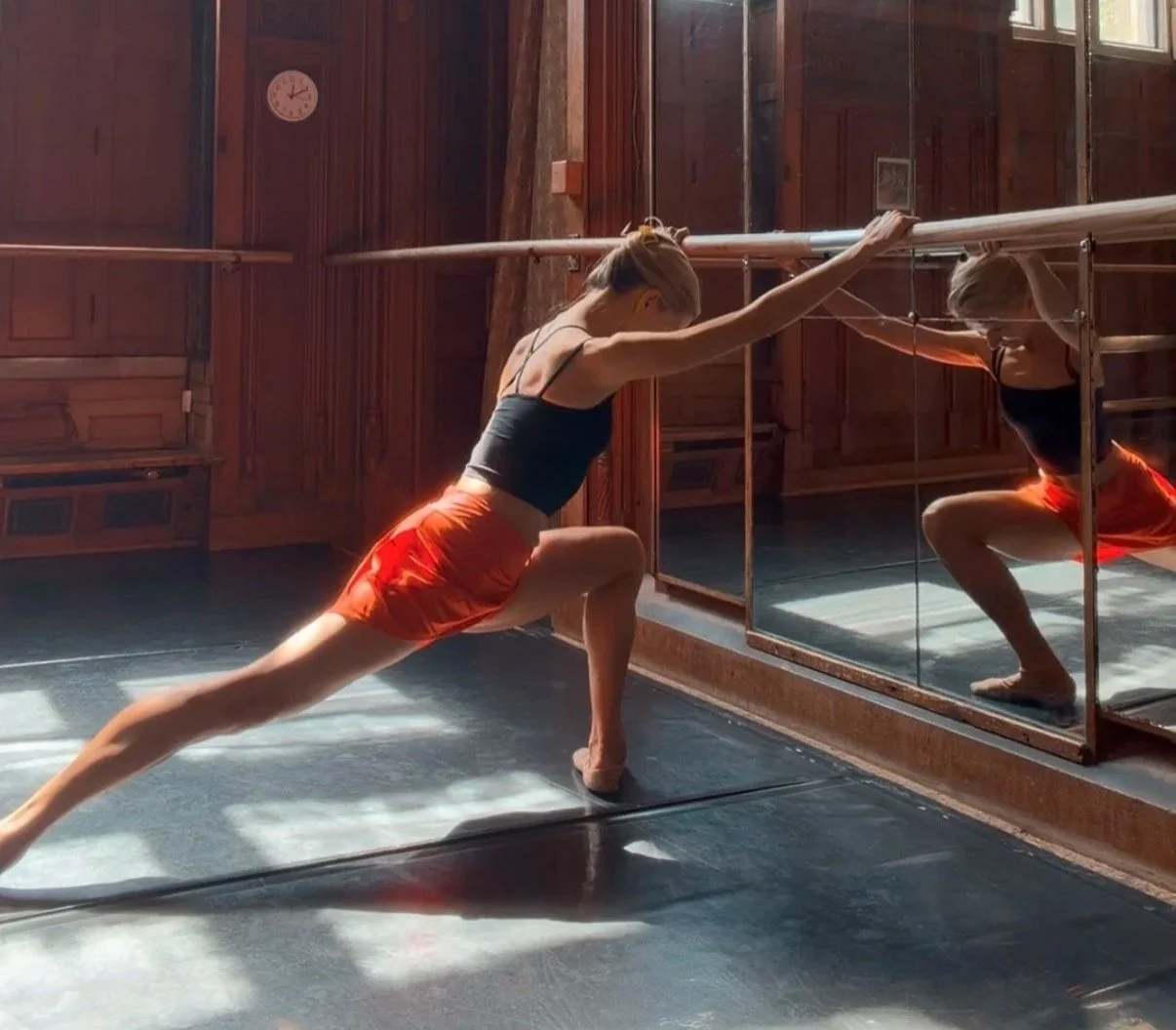
Both can help you become more aware of your alignment, strengthen the muscles that support your posture and move with greater control. But they do not train the body in exactly the same way. Understanding the difference is important — particularly if you spend long hours sitting at a desk, working on a laptop or living a busy modern lifestyle.
What does “good posture” actually mean?
Good posture is not simply standing perfectly upright. The human body is constantly moving. Your posture changes when you walk, sit, reach, turn, lift something or stand on one leg. Functional posture therefore involves the ability to organise and control the body while moving.
This is where both ballet and Pilates can become valuable. However, they approach the problem from different directions.
What does Pilates train?
Pilates is strongly associated with core stability, controlled movement, breathing, precision and body awareness.
A systematic review of Pilates research found evidence suggesting that Pilates can improve aspects of body posture, including changes involving the cervical, thoracic and lumbar regions. (PubMed)
A more recent systematic review and meta-analysis also found potential improvements in several measures of postural alignment, although the certainty of evidence varied between outcomes. (PubMed)
In practical terms, Pilates can help you become more aware of:
your spinal position
pelvic alignment
abdominal control
breathing
trunk stability
controlled movement
It often works from the centre outward.
What does ballet train?
Ballet approaches posture through alignment in movement. A dancer learns how the feet, knees, hips, pelvis, spine, shoulders, arms, head and eyes relate to one another.
But ballet adds another dimension:
movement quality.
The dancer isn’t simply asked to hold good posture. She has to maintain alignment while:
balancing
turning
transferring weight
moving the legs
coordinating the arms
changing direction
travelling through space
This creates a very different challenge.
Classical ballet requires dancers to repeatedly control their balance and alignment on relatively small bases of support. Research reviewing classical ballet has found differences in balance ability between dancers and non-dancers, although the quality of the available evidence varies. (PubMed)
Pilates teaches control. Ballet teaches control in motion.
This is an oversimplification — both methods do both — but it is a useful way to understand the distinction.
Think of Pilates as giving you a movement laboratory.
You can slow down.
You can focus on your breathing.
You can isolate and control particular movements.
Ballet then asks you to take that awareness into a more complex movement environment. You have to maintain your centre while the arms and legs move, while your weight shifts and while you coordinate multiple actions simultaneously.
Ballet posture is not about holding yourself stiff
This is a common misconception. Beautiful ballet posture is not rigid. A professional dancer needs stability without unnecessary tension.
The shoulders must remain free.
The neck must remain mobile.
The arms must move naturally.
The spine must be controlled but not frozen.
The body has to look effortless precisely because enormous amounts of coordination are happening underneath the movement.
This is one reason ballet can be so valuable for adults who want to improve their posture without simply “standing up straight.”
What happens when you combine ballet and Pilates?
This is where the two methods complement each other particularly well.
Pilates can help develop:
Core control
+
Spinal awareness
+
Pelvic stability
+
Breathing
+
Precision
Ballet can add:
Alignment in movement
+
Balance
+
Coordination
+
Weight transfer
+
Graceful movement
+
Spatial awareness
Together, they create a more complete movement experience.
Research involving dancers has also explored Pilates as a complementary form of training. One study found improvements in postural alignment, flexibility and abdominal strength when Pilates was added to dance training. (PubMed)
Which is better for posture?
There isn’t one universal answer.
If your main goal is developing awareness of your core, spine and controlled movement, Pilates may be particularly useful.
If you want to develop alignment while simultaneously balancing, coordinating the limbs and moving through space, ballet offers a different challenge.
And if you want both?
Combining them makes sense.
This is one of the principles behind Ballet Body Sculpture.
The Ballet Body Sculpture approach
Ballet Body Sculpture brings ballet and Pilates together rather than treating them as competing methods.
The ballet component develops:
posture
alignment
coordination
balance
graceful movement
The Pilates component develops:
core stability
precision
controlled movement
body awareness
Conditioning and mobility then complete the picture.
The result is not traditional ballet class and it is not simply another Pilates workout.
It is a method designed around how the whole body works together.
Your posture is a movement skill
Perhaps the most important thing to remember is that posture is not something you simply “fix.” It is something you practise.
Every time you walk, stand, sit, reach, turn or balance, you are giving your nervous system information about how you organise your body. That is why movement-based approaches can be so valuable.
Instead of constantly reminding yourself:
“Shoulders back. Stomach in. Stand straight.”
you can train your body to develop greater awareness and control.
And eventually, better posture can begin to feel less like something you are forcing — and more like the natural way you move.
Ballet + Pilates = posture with movement intelligence
For adults who want to improve posture, strengthen the core and develop more graceful movement, ballet and Pilates don’t have to compete.
They can work together.
That combination is at the heart of the Ballet Body Sculpture Method.
Discover Ballet Body Sculpture Classes & Workshops