Can you learn to do the splits as an adult — even if you’ve never been particularly flexible?
For many people, the splits represent the ultimate flexibility goal.
They are frequently associated with ballet dancers, gymnasts and highly trained athletes.
But flexibility is not simply something you either have or don’t have.
It is a physical quality that can often be developed through consistent, appropriately structured training.
The important question is not how quickly you can force your body into a position.
It is how to develop greater range of motion while maintaining strength, control and joint stability.
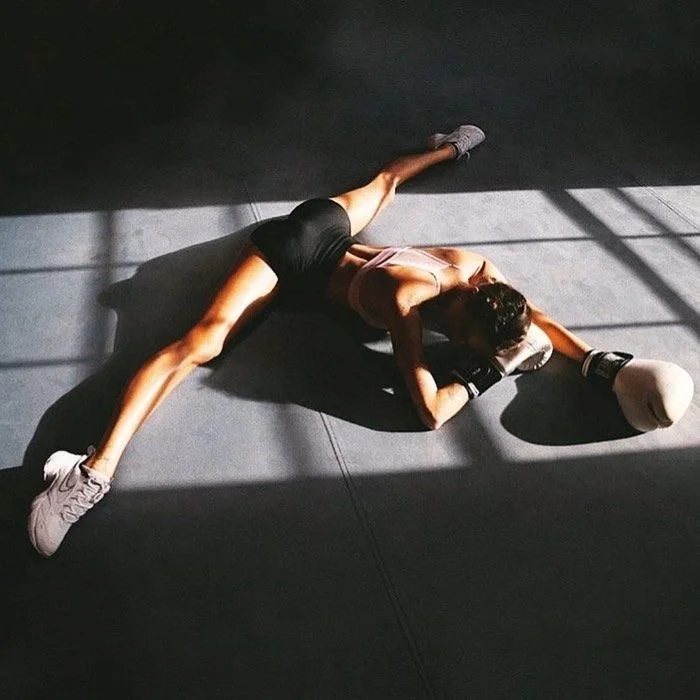
What Actually Determines Flexibility?
Flexibility describes the available range of motion around a joint.
It is influenced by several factors, including:
Joint structure and individual anatomy.
Muscle and connective-tissue characteristics.
Nervous-system responses to stretching.
Previous training and movement habits.
Strength and control within the available range.
This explains why two people can follow the same stretching programme and progress at different speeds.
Individual anatomy also means that achieving a full split may not be realistic or appropriate for everyone.
What Does Science Say About Stretching?
A 2025 international consensus involving stretching researchers concluded that stretching can improve range of motion both immediately and through long-term training.
However, the same consensus found insufficient support for several popular claims, including that stretching alone corrects posture or reliably prevents injuries.
This is an important distinction.
Stretching is useful for developing flexibility.
But a complete movement programme also needs strength, coordination and control.
1. Warm Up Before Deep Stretching
Trying to force a deep stretch while your body is cold is unnecessary and may increase discomfort.
Begin with gentle movement that gradually raises your body temperature.
This might include walking, controlled leg movements, easy pliés or other comfortable exercises.
The aim is to prepare your body for a progressively greater range of motion.
2. Develop Hip Mobility
Working towards the splits requires mobility around the hips.
For front splits, the front leg requires substantial hip flexion, while the back leg requires hip extension.
The hamstrings and hip flexors are therefore particularly relevant.
However, forcing the pelvis into an extreme position is not the goal.
Instead, work gradually on controlled hip movement while maintaining comfortable alignment.
3. Strengthen the Muscles You Are Stretching
One of the most important lessons from professional ballet training is that flexibility without control is not enough.
A dancer may need to lift a leg into a high position and hold it there without assistance.
That requires muscular strength within the available range of motion.
A 2025 systematic review and meta-analysis found that resistance training can improve joint flexibility, although the studies varied in quality.
This suggests that stretching and strengthening can work together rather than being treated as competing methods.
4. Practise Consistently Rather Than Aggressively
Flexibility develops through repeated exposure to manageable ranges of movement.
Occasional extreme stretching sessions are not necessarily more effective than regular, moderate practice.
For beginners, two or three focused flexibility sessions per week can be a practical starting point.
Progress gradually according to comfort and recovery.
Stretching should create a manageable sensation of tension, not sharp pain, numbness or joint instability.
5. Understand the Difference Between Passive and Active Flexibility
Passive flexibility describes the range you can reach with assistance, such as using your hands or gravity.
Active flexibility describes the range you can control using your own muscles.
Both are relevant, but they serve different purposes.
In classical ballet, active flexibility is especially important because dancers must control their legs and bodies during movement.
This is why simply being able to sit in a split does not automatically translate into a high, controlled leg extension.
6. Avoid the Most Common Splits-Training Mistakes
Progress can be limited by attempting too much too soon.
Common mistakes include:
Forcing the body into painful positions.
Bouncing aggressively at the end of a stretch.
Ignoring hip or knee discomfort.
Stretching without developing strength.
Comparing progress with naturally hypermobile people.
Assuming that everyone must achieve a full split.
The objective should be improved movement capacity, not forcing the body into a predetermined shape.
How Ballet Body Sculpture Approaches Flexibility
At Ballet Body Sculpture, flexibility is developed as part of a broader movement system.
Classical ballet technique provides alignment, balance and coordination.
Pilates-based exercises develop trunk control.
Body conditioning builds strength.
Stretching and mobility training help expand comfortable movement possibilities.
This integrated approach is especially valuable for adults who want to improve flexibility without losing stability.
Personal training can also provide a more individualised approach for those working towards specific flexibility goals.
Frequently Asked Questions
Can adults learn to do the splits?
Some adults can achieve full splits through progressive training, but results depend on anatomy, mobility, previous experience and individual limitations.
How long does it take to achieve the splits?
There is no reliable universal timeline. Progress may take months or longer, and a full split is not an appropriate goal for every body.
Is yoga or ballet better for flexibility?
Both can support flexibility. Yoga often includes sustained postures, while ballet combines flexibility with movement control and coordination.
Does stretching prevent injuries?
Stretching alone is not a comprehensive injury-prevention strategy. Strength, appropriate training loads, balance and exercise technique also matter.
Is personal training useful for improving flexibility?
It can help by providing individualised exercise selection, appropriate progression and attention to movement control.
Develop Flexibility With Strength and Grace
Flexibility is not simply about reaching further. It is about learning to move through a greater range with confidence, strength and control.
At Ballet Body Sculpture, professional ballet principles meet Pilates, body conditioning and mobility training.
Discover classes and personalised training in Zurich, London and online.
https://www.balletbodysculpture.com
Flexibility creates possibilities. Strength gives you control.