When was the last time you challenged your balance?
Most people associate fitness with strength, flexibility, cardiovascular endurance or weight management.
Yet one of the most important physical abilities is frequently overlooked: balance.
Balance allows us to walk confidently, change direction, climb stairs, maintain posture and respond to unexpected movements.
And although it may seem effortless in everyday life, balance is an extraordinarily complex physical skill.
Professional ballet dancers spend years developing it.
At Ballet Body Sculpture, these principles of classical ballet are adapted into a fitness method that helps adults develop strength, coordination and movement control.
What Is Balance, and Why Is It Important?
Balance is the ability to maintain or regain control of your body’s position.
It depends on several systems working together, including:
Vision, which helps us understand our position in space.
The vestibular system in the inner ear, which contributes to orientation and equilibrium.
Proprioception, our awareness of body position and movement.
Muscular strength and coordination.
The nervous system’s ability to respond to changing conditions.
Good balance is not simply about standing still.
It also involves controlling the body while walking, turning, reaching and transferring weight.
This is known as dynamic balance.
Why Ballet Is Particularly Interesting for Balance Training
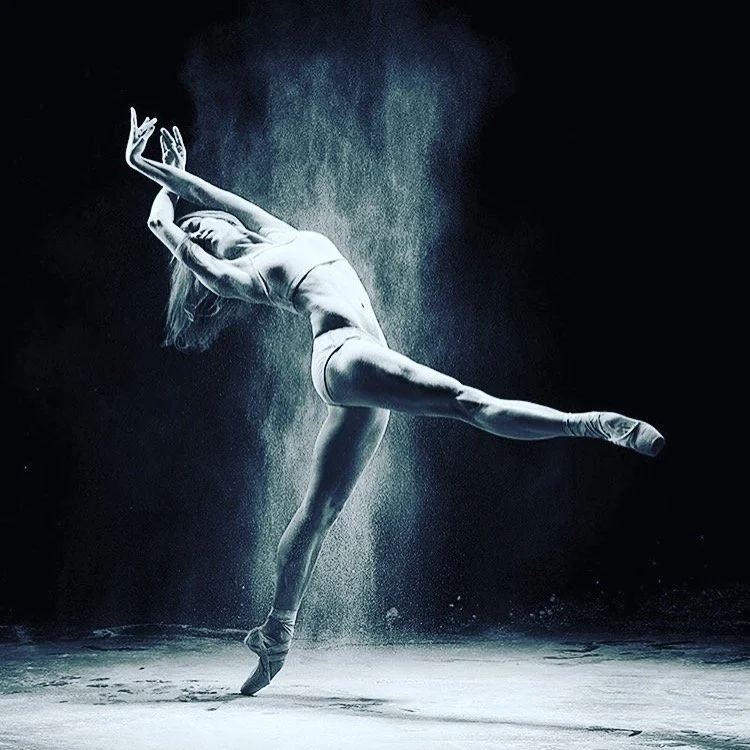
Classical ballet constantly challenges the body’s ability to maintain stability.
A dancer may stand on one leg while extending the other, coordinate complex arm movements or transfer weight through different positions.
Even a simple relevé requires precise control of the feet, ankles, legs and trunk.
Ballet training therefore combines several elements:
Strength + Alignment + Coordination + Body Awareness
Rather than training balance as an isolated exercise, ballet integrates it into movement.
What Does Scientific Research Say?
A study published in Research Quarterly for Exercise and Sport investigated a ten-week classical ballet programme involving 22 healthy women over 50.
Participants demonstrated improvements in certain measures of lower-limb strength, alongside improvement in one balance measure.
The researchers also reported high adherence among those completing the programme.
Although the study was small and did not include a control group, its findings suggest that recreational ballet deserves further investigation as an enjoyable form of exercise for middle-aged and older adults.
Research into experienced ballet dancers has also identified differences in balance responses and neuromuscular coordination compared with non-dancers.
However, the physical abilities of professional dancers should not be assumed to develop automatically after a few recreational classes.
Five Ballet-Inspired Exercises That Challenge Balance
1. Relevé — Rising Onto the Balls of the Feet
Stand with your feet in a comfortable parallel position.
Slowly rise onto the balls of your feet, then lower your heels with control.
Use a stable support if necessary.
This movement challenges the calf muscles, ankles and postural control.
2. Single-Leg Balance
Stand beside a stable barre or chair.
Transfer your weight onto one leg and gently lift the other foot.
Maintain a comfortable upright position without locking the supporting knee.
This develops awareness of weight distribution and stability.
3. Tendu — Controlled Leg Extension
From a comfortable standing position, extend one foot along the floor while maintaining control of the supporting leg and pelvis.
Return slowly.
This movement challenges coordination and weight transfer.
4. Port de Bras With Controlled Weight Shifts
Practise gentle ballet-inspired arm movements while transferring your weight between the feet.
The aim is to maintain balance while the upper body moves.
5. Slow Pliés
Perform small, controlled knee bends with attention to alignment.
Keep the knees moving comfortably in line with the feet.
Pliés develop leg control and awareness of how the body moves through different positions.
These exercises should be performed within your abilities, using support when needed.
Why Core Strength Matters for Balance
Balance is not controlled by the feet alone.
The trunk, pelvis and hips all contribute to maintaining stability.
This is where Pilates principles can complement ballet.
Pilates develops controlled trunk movement and body awareness, while ballet challenges the application of that control during standing exercises and weight transfers.
At Ballet Body Sculpture, these approaches are combined with body conditioning and mobility work.
The objective is to train the body as an integrated movement system.
Balance Training Is Valuable at Every Age
Although balance becomes particularly important as we grow older, there is no reason to wait until later life to develop it.
Adults who spend long hours sitting may benefit from introducing more varied movement into their routines.
Those already practising Pilates, yoga or strength training may enjoy the additional coordination challenges of ballet-inspired exercises.
For older adults, appropriately structured balance and strength training can also form part of a broader approach to maintaining physical independence.
The Ballet Body Sculpture Method
Created by former international Principal Ballerina Asta Bazeviciute, Ballet Body Sculpture brings professional ballet principles into adult fitness.
The method combines:
Classical ballet for balance, posture and coordination.
Pilates for core control and precision.
Body conditioning for muscular strength and endurance.
Mobility and stretching for freedom of movement.
The aim is not simply to improve how the body looks.
It is to develop the physical qualities that make movement more controlled, confident and enjoyable.
Frequently Asked Questions
Can ballet improve balance in adults?
Ballet-inspired training challenges balance, coordination and muscular control. Early research is promising, although more high-quality studies are needed to establish the size of its benefits.
Is Pilates or ballet better for balance?
Both can be useful. Pilates emphasises controlled movement and trunk stability, while ballet frequently challenges standing balance, weight transfers and coordination.
How often should I practise balance exercises?
Short, regular practice can be useful. The appropriate frequency depends on your ability, goals and overall exercise routine.
Can beginners try ballet balance exercises?
Yes. Exercises can be adapted with stable support and simplified positions.
Discover Better Balance With Ballet Body Sculpture
Balance is more than a fitness skill.
It is an essential part of moving with confidence and control.
At Ballet Body Sculpture, professional ballet principles meet Pilates, conditioning and mobility in a method designed for adults.
Explore group classes, personal training and online programmes in Zurich, London and beyond.
https://www.balletbodysculpture.com
Strength gives you stability. Coordination gives you freedom. Ballet brings them together.